
Hooked: How to Build Habit-Forming Products
Nir Eyal’s “Hooked” isn’t just about building addictive products; it’s about understanding the psychology behind habit formation and applying those principles to improve personal productivity and well-being. The core of the book lies in a four-step process – the Hook Model – that can be leveraged for both designing compelling products and mastering personal habits.
The Hook Model: A Framework for Habit Formation
The Hook Model is the central framework of the book. It’s a four-step process designed to create a cycle of user engagement that ultimately leads to habit formation.
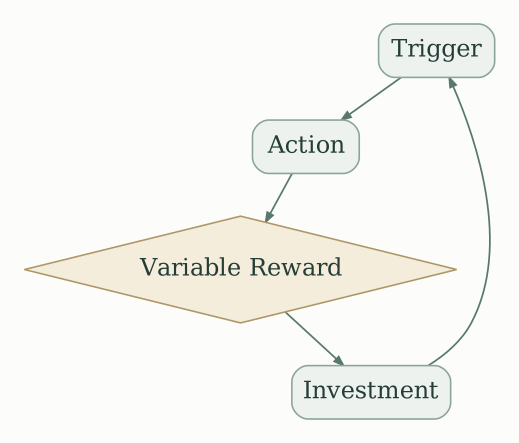
- Trigger: This initiates the user’s engagement. It can be external (a notification, an email, a friend’s post) or internal (a feeling of boredom, loneliness, or stress).
- Action: This is the simplest behavior done in anticipation of a reward. It should be easy and require minimal effort.
- Variable Reward: This is the unpredictable reward that keeps users coming back. It’s the core of the “hook” and taps into our brain’s reward system. The reward must be variable to maximize engagement.
- Investment: This is the action the user takes that increases the likelihood of them returning to the product. This might involve customizing a profile, adding friends, or creating content.
The cycle repeats, making the product or habit increasingly ingrained in the user’s routine.
Types of Variable Rewards
Understanding the types of variable rewards is key to implementing the Hook Model effectively. Eyal outlines three main categories:
- Tribes: The reward is social connection and validation. This taps into our innate desire to belong and be accepted. Examples include social media platforms and online communities.
- The Hunt: The reward is the acquisition of something desirable. This can be physical (like finding a great deal online) or psychological (like solving a puzzle or leveling up in a game).
- Self: The reward is an improvement in personal capabilities or knowledge. This taps into our innate desire for self-improvement and mastery.
Understanding which type of reward best fits your desired habit or product is key to its success.
Triggers: External vs. Internal
Effective habit formation relies on understanding and utilizing both external and internal triggers.
External Triggers: These are readily available, like notifications, emails, or physical cues. They are essential for initiating the Hook process, especially in the early stages. However, overuse can lead to users feeling manipulated.
Internal Triggers: These are based on emotions or mental states. This is where the true power of habit formation lies. Understanding what emotional states or needs your desired habit addresses is critical for long-term success. For example, if you’re stressed, you might reach for a specific app or activity as a coping mechanism.
Designing for Action
The Action phase must be simple and easy to perform. Reduce friction as much as possible. This includes:
- Minimizing Steps: Make the process as straightforward as possible.
- Clear Call-to-Actions: Use simple and unambiguous language.
- Habit Stacking: Couple the new habit with an existing one.
Variable Rewards: The Engine of Engagement
The unpredictability of the reward is crucial. The excitement of uncertainty is what keeps users coming back for more. Examples include:
- Random Rewards: Loot boxes in games, surprise updates, or unexpected messages.
- Unpredictable Rewards: The outcome is unclear, adding suspense and intrigue.
- Social Rewards: Likes, comments, and shares provide variable reinforcement.
Investment: Increasing User Commitment
The Investment stage solidifies the habit loop. This phase enhances the user’s relationship with the product/habit, making it harder to quit. Examples include:
- Data Input: The more data users input, the more invested they become.
- Customization: Allowing users to personalize their experience creates a sense of ownership.
- Community Building: Creating relationships within a group or community makes it harder to leave.
Applying the Hook Model to Your Life
The Hook Model isn’t just for product design; it can be applied to create positive habits and break negative ones. By understanding the four steps, you can identify your personal triggers, actions, rewards, and investments and design a system for personal growth.
For example, wanting to establish a daily exercise routine:
- Trigger: Set a reminder on your phone at a specific time (external) or associate the feeling of sluggishness (internal) with going for a run.
- Action: Putting on your running shoes.
- Variable Reward: A feeling of accomplishment, listening to an engaging podcast during your run, or seeing improvements in your fitness levels.
- Investment: Tracking your progress using a fitness app, joining a running group, or buying new running gear.
Beyond the Hook Model: Ethical Considerations
Eyal emphasizes the ethical considerations of understanding and utilizing habit-forming techniques. He strongly advocates for creating products and habits that genuinely benefit users rather than exploiting their vulnerabilities. The factor is the value offered. A product or habit that delivers genuine value will naturally engage users without resorting to manipulative tactics. Focus on providing positive user experiences and building genuine loyalty. Consider the long-term consequences of your design and be transparent with your users.
Building Good Habits
The key is to replace negative habits with positive ones using the Hook Model framework, focusing on offering a genuine benefit to the user. Instead of focusing on what you’re giving up, focus on the positive rewards of a new habit.
- Identify the underlying need: What are you trying to achieve with your habit?
- Choose a desirable reward: What will make it enjoyable?
- Reduce friction: Make it as easy as possible to engage in the habit.
- Track your progress: Monitor your success to stay motivated.
Breaking Bad Habits
To break a bad habit, disrupt the Hook Model:
- Identify the triggers: What initiates the habit?
- Reduce exposure: Avoid situations or stimuli that trigger the habit.
- Replace the reward: Find alternative ways to satisfy the underlying need.
- Increase friction: Make the habit harder to perform.
“Hooked” provides a powerful framework for understanding the psychology of habit formation and applying it to both product design and personal growth. By understanding and ethically applying the Hook Model, you can create products that provide genuine value and create healthy, fulfilling habits in your own life. The ultimate message is about mindful engagement, understanding your behaviors, and leveraging this knowledge for personal improvement rather than manipulation.


