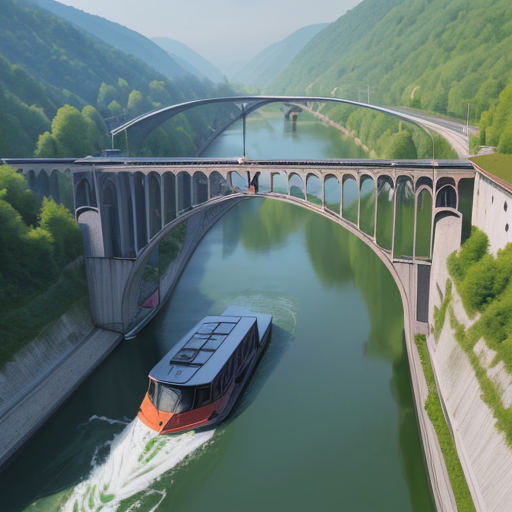
The Bridge on the Drina: A Chronicle of Time and Humanity
Ivo Andrić’s The Bridge on the Drina is not a novel driven by a singular plotline in the traditional sense. Instead, it’s a sprawling historical panorama, a tapestry woven from centuries of life surrounding the iconic bridge in Višegrad, Bosnia. The narrative flows like the Drina River itself, meandering through time, reflecting the joys, sorrows, triumphs, and tragedies of generations. While individual characters emerge and fade, the bridge remains the enduring constant, a silent witness to the unfolding drama.
The Enduring Symbol: The Bridge and its Significance
The bridge itself transcends its physical form; it becomes a powerful metaphor for life, history, and the interconnectedness of humanity. Its construction, a feat of Ottoman engineering, represents the ambition and potential of human creation. Yet, it also bears witness to countless acts of violence, destruction, and renewal, mirroring the cyclical nature of history and the persistent resilience of human spirit. The bridge unites and divides, serving as a crossroads for different cultures, religions, and social strata, representing both cooperation and conflict. This multifaceted symbolism permeates the entire novel, giving it depth and resonating meaning far beyond its historical setting.
A Cast of Characters: Woven into the Fabric of Time
The Bridge on the Drina features a vast ensemble cast, with no single protagonist dominating the narrative. Instead, characters emerge, play their roles in the unfolding saga, and then recede into the background, replaced by new individuals whose lives intersect with the bridge and the river. The narrative employs a cyclical pattern: lives are born, flourish, and end, leaving behind their imprint on the community and the enduring structure of the bridge.
Some of the more prominent characters include:
- The Bridge Builder: Though unnamed, this pivotal figure represents human ambition and the desire to leave a lasting legacy. His work endures far beyond his own lifetime, highlighting the long-term impact of human endeavors.
- The various inhabitants of Višegrad: Andrić presents a diverse cast of characters representing different social classes, religions, and ethnicities, showing their interactions, conflicts, and eventual coexistence under the same sky, reflecting the complexities of human relations and the fluid nature of identity.
- Specific individuals within different generations: The narrative introduces numerous individuals whose lives are intricately woven into the history of the bridge and the town. These characters, while not always central, illustrate the changes and continuities within the community over time. Their actions and relationships illustrate the consequences of individual choices and how personal lives are shaped by the larger historical context.
Key Themes: A Multi-Layered Exploration
The novel’s themes are interconnected and interwoven throughout the narrative, reflecting Andrić’s profound understanding of history and the human condition. Some of the most significant include:
- The cyclical nature of history: The bridge witnesses countless wars, conquests, and periods of peace, demonstrating the repetitive patterns of human conflict and cooperation.
- The passage of time and the fleeting nature of life: Generations rise and fall, yet the bridge remains a constant observer, highlighting the ephemeral nature of individual lives in contrast to the enduring presence of human creation.
- The interconnectedness of humanity: The bridge unites people from different backgrounds, religions, and cultures, reminding us of our shared human experience despite our differences.
- The power of nature and its influence on human life: The Drina River, a force of nature, shapes the lives of the people of Višegrad, reflecting the power of natural forces to both nurture and destroy.
- The complexities of power and its effects: The Ottoman Empire, and then other empires and occupying forces, exert their power over the town and its people, showcasing the destructive aspects of unchecked power and how communities adapt under different political and cultural realities.
The Central Conflict: A Clash of Cultures and Time
The central conflict isn’t a singular event but rather a constant interplay between different cultures, religions, and political forces. The bridge itself becomes a focal point of this conflict, a space where diverse groups meet and interact, sometimes peacefully, sometimes violently. This conflict is not just between specific groups, but also within individuals, who are often caught between conflicting loyalties and identities. The struggle for power and the resulting displacement and destruction of communities is also a key conflict.
Character Development: A Tapestry of Lives
Andrić’s characters are not always fully developed in a traditional sense. Their stories are often fragmented, reflecting the fragmented nature of history itself. However, their collective experience reveals the profound impact of historical events on individual lives. We see characters struggling with their identities, adapting to changing circumstances, facing personal tragedies, and striving to make sense of their place in the world. The narrative shows how personal and societal traumas are passed through generations. We see the constant fight for survival, the struggles for freedom and independence, and the ongoing need to define one’s position in a rapidly changing political and social landscape. This reflects the difficulty in building personal and collective identities amidst constant upheaval.
Lessons and Morals: Applying Wisdom to Life
The Bridge on the Drina offers several valuable lessons applicable to contemporary life:
- Perspective and Patience: Understanding the cyclical nature of history fosters patience and a broader perspective on challenges. Knowing that even great empires eventually fall can help us manage our own anxieties about temporary setbacks. This applies to both personal and professional goals, promoting perseverance and resilience.
- The importance of cooperation and understanding: The bridge’s role in connecting diverse communities highlights the importance of intercultural dialogue and cooperation. In today’s globalized world, this lesson is crucial for resolving conflicts, building strong relationships, and achieving collective goals.
- The enduring power of human creation: The bridge’s resilience underscores the importance of creating enduring value. Whether in our personal lives, professional endeavors, or community involvement, striving to leave a positive legacy can provide a sense of purpose and meaning. This calls for making deliberate and conscious choices to invest one’s time and energy in positive pursuits.
- Adaptability and Resilience: The inhabitants of Višegrad demonstrate exceptional resilience in the face of adversity. This highlights the need for flexibility and adaptability in life, both personally and professionally. Being able to adjust to changing circumstances and learn from setbacks is vital for success.
- Leadership through service: The effective leadership highlighted is often based on community service, social justice, and promoting unity among diverse groups. The most successful leaders are those who promote equity and fairness, listen to different viewpoints, and strive to make decisions benefiting the entire community. These principles can be applied to various leadership roles, from community organizations to corporate settings.
The Enduring Message: Reflections on the Modern World
The Bridge on the Drina resonates powerfully with contemporary challenges because it explores themes that remain as relevant today as they were centuries ago. The novel serves as a powerful reminder of the fragility of peace, the cyclical nature of conflict, and the enduring impact of historical events on present-day realities. It emphasizes the importance of understanding our shared history to prevent repeating past mistakes and to foster stronger, more empathetic communities. The novel’s exploration of cultural clashes and the impact of political power are strikingly relevant in our current world, where rising nationalism and political polarization pose significant challenges to global stability and social harmony. The lessons of cooperation, resilience, and the pursuit of a shared future remain as vital today as they were in the time of the Ottoman Empire. The book encourages critical examination of power structures, the need for peaceful conflict resolution, and the importance of building bridges (both literally and metaphorically) between diverse communities. Its enduring message urges us to strive for a future where understanding, empathy, and cooperation overcome conflict and division.


