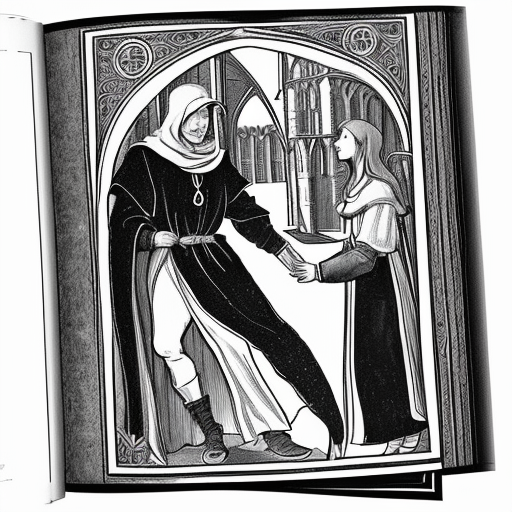
The Canterbury Tales: A Pilgrimage of Life
Geoffrey Chaucer’s The Canterbury Tales isn’t a novel in the traditional sense, lacking a single, overarching plot. Instead, it’s a collection of interconnected stories told by a various group of pilgrims journeying to Canterbury Cathedral to visit the shrine of Saint Thomas Becket. The “main plot,” if one can call it that, is the pilgrimage itself, which serves as a framing device for the individual tales. The journey becomes a microcosm of medieval society, revealing the complexities and contradictions of human nature through the varied narratives and personalities of the travelers.
The Pilgrims: A Medieval Society
The pilgrims represent a broad cross-section of 14th-century English society. Chaucer masterfully uses his descriptions and the tales themselves to reveal each character’s social standing, occupation, values, and flaws. The Knight, an ideal of chivalry, contrasts sharply with the Wife of Bath, a sexually independent and outspoken woman. The Pardoner, a corrupt church official, stands in opposition to the humble and pious Parson. The characters include:
The Knight: A valiant and honorable warrior, embodying the idealized chivalric code. His tale reflects his values of courtesy, honor, and perseverance.
The Wife of Bath: A shrewd, independent woman with considerable experience and a sharp tongue. Her tale and her own experiences challenge the societal norms surrounding women’s roles and sexuality.
The Pardoner: A morally bankrupt clergyman who sells fake relics and indulgences. His tale, ironically, is a cautionary one about greed and hypocrisy, highlighting the discrepancy between his words and actions.
The Friar: A worldly and corrupt religious figure more interested in worldly pleasures than spiritual matters.
The Summoner: A morally reprehensible church official who extorts money from those accused of sin.
The Clerk: A humble scholar, more interested in knowledge than wealth or status.
The Manciple: A shrewd and practical manager who outsmarts his masters.
The Miller: A boisterous and crude storyteller, whose tales often involve vulgarity and deception.
The Host: The innkeeper who organizes the pilgrimage and proposes the storytelling contest. He acts as a moderator and commentator, shaping the dynamic among the pilgrims.
These are just a few of the many pilgrims, each with their unique story and perspective. Their diversity is important to the work’s impact. It’s not simply a catalog of individuals, but a portrayal of the conflicts and tensions within society at the time.
Themes and Central Conflict: Morality, Deception, and the Human Condition
Several central themes intertwine throughout The Canterbury Tales:
The Nature of Morality: The tales constantly challenge societal norms and look at different conceptions of morality. The pilgrims’ actions and stories often contrast sharply with their professed beliefs, revealing the complexities of human behavior. The central conflict arises not from a singular battle but from the internal struggles of each character to reconcile their actions with their ideals.
Deception and Hypocrisy: Many characters, particularly the religious figures, display considerable hypocrisy, using their positions for personal gain rather than serving their intended purposes. The Pardoner’s tale, for instance, is a direct condemnation of hypocrisy and greed.
Social Class and Power: The pilgrimage itself highlights the stark realities of social class and power dynamics in medieval England. The interactions between pilgrims from different social classes reveal tensions and prejudices.
Courtly Love and Sexuality: The tales offer varied views on love, marriage, and sexuality, often challenging or subverting the accepted norms of courtly love. The Wife of Bath, in particular, embodies a feminist spirit through her defiance of the patriarchal structures of the time.
The Power of Storytelling: The act of storytelling itself becomes an element. The tales are not just entertaining narratives but also tools for exploring the complexities of the human condition, examining morality, and revealing social truths.
Character Development and Resolution
The pilgrimage acts as a catalyst for character development, albeit indirectly. While there is no significant transformation in individual characters’ fundamental personalities, their interactions and the stories they tell reveal different facets of their characters. For example, the Wife of Bath’s tales demonstrate her strong personality and independent views while simultaneously exposing her flaws. The Knight’s tale shows his adherence to chivalric ideals while hinting at a more human, fallible side. The lack of individual resolutions reflects the complexities of human nature. These characters are not simply good or bad, but contradictory—a reflection of the real world.
Lessons and Morals: Applying the Tales to Modern Life
The Canterbury Tales offers numerous lessons applicable to contemporary life.
Self-Awareness: The pilgrims’ flaws and hypocrisies highlight the importance of self-awareness. Understanding one’s own biases and weaknesses is important for personal growth and effective relationships. By analyzing the motivations and actions of the pilgrims, we can reflect on our own behavior and strive for greater self-understanding.
Critical Thinking: The tales encourage critical thinking by presenting various viewpoints and challenging conventional wisdom. Learning to analyze information from multiple angles and question assumptions is vital in both personal and professional contexts.
Ethical Decision-Making: The contrasting moral choices of the pilgrims illustrate the importance of ethical decision-making. Considering the consequences of actions, prioritizing integrity, and acting with compassion are important for navigating complex situations.
Effective Communication: The interactions between the pilgrims demonstrate the power of communication, both positive and negative. Mastering clear, respectful communication and actively listening are critical for building strong relationships and achieving professional success.
Leadership and Management: The Host’s role in organizing and managing the storytelling contest offers experience in leadership. Effective leadership requires empathy, clear communication, conflict resolution skills, and the ability to create a collaborative environment.
Resonance with Contemporary Challenges and Values
The Canterbury Tales, despite its medieval setting, resonates powerfully with contemporary challenges and values. The themes of social inequality, religious hypocrisy, and the search for meaning remain relevant today. The work’s exploration of human nature, with all its flaws and complexities, continues to offer understanding of the human condition. The constant questioning of morality, the examination of societal norms, and the various range of characters make it a work that transcends its historical context and continues to provoke thought and discussion in the 21st century. The questions raised about fairness, justice, and the role of faith in society remain as timely and relevant as they were in Chaucer’s time. The tales serve as a timeless reminder of the enduring power of storytelling to reflect, challenge, and ultimately, to illuminate the complexities of human experience.


